We moved in July 2026. Find us on South Main Street. 1547 S. Main St, Waynesville, NC 28786

ESTIMATION TOOLS FOR YOUR WORKTABLE

Measure Twice.
Make with Complete Confidence.

Every great project begins at the cutting table with good measurements and an honest estimate. Use these free, client-side calculators to plan upholstery revivals, custom draperies, and quilt yardage privately in your browser before you cut or buy.
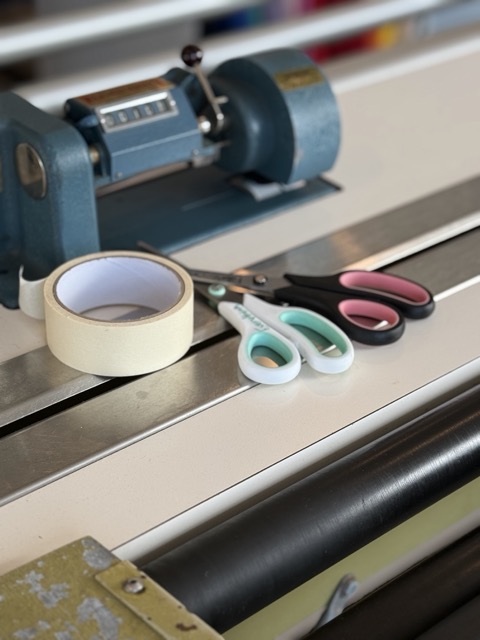
Scissors and measuring equipment on the cutting table
Start at the cutting table

WELCOME TO THE TABLE

Your Next Creation Is Waiting

Whether you're searching for the perfect upholstery fabric, planning new draperies, piecing together your next quilt, or simply looking for inspiration, there's a place for you at Superior Bargain Fabrics.

Sue and our team invite you to stop by, explore, ask questions, and stay awhile.

Bring your ideas. Bring your curiosity. Bring that project you've been thinking about for years.

We'll bring the fabric.

Superior Bargain Fabrics — Where Every Fabric Holds a Possibility, and Every Creator Has a Story.

A Thoughtful Starting Point for Your Project

These calculators provide a clear yardage baseline so you know what to expect before shopping. Because every furniture frame, window casing, and quilt layout has its own character, jot down your dimensions and bring them into our South Main shop so we can confirm the cutting plan together.

Private, Accessible & Completely Data-Free

Your project plans stay on your device. Every estimator runs locally in your browser with zero tracking, no cookies, and no forms—adjust your numbers freely and print or copy your estimate for your trip to the store.

01 / Upholstery

Upholstery yardage

Choose one furniture piece to estimate. Browse a category, then select the closest style. Guide amounts assume 54-inch-wide plain fabric.

Furniture categories
Choose your project

Draft planning allowance: add 10% for a combined horizontal + vertical repeat up to 12 inches, 15% up to 24 inches, 20% up to 36 inches, and 25% above 36 inches. This is a planning rule, not a cutting layout; large motifs and exact placement may need more.

How to measure a pattern repeat

Find a recognizable point on a motif, such as the tip of a leaf. Measure to the same point on the next identical motif: across the fabric for the horizontal repeat, and along its length for the vertical repeat. Measure the actual fabric in inches; do not measure these pictures.

Small leafy sprigs repeated in aligned rows and columns on cream fabric.

Small sprig · short repeat

6 inches across + 6 inches along = 12-inch combined repeat. Add 10%: 1 extra yard on a 10-yard baseline, for 11 yards total.

Green and gold damask medallions repeated in aligned rows and columns.

Damask · medium repeat

12 inches across + 12 inches along = 24-inch combined repeat. Add 15%: 1.5 extra yards on a 10-yard baseline, for 11.5 yards total.

Large terracotta botanical bouquets repeated in aligned rows and columns.

Botanical · large repeat

24 inches across + 24 inches along = 48-inch combined repeat. Add 25%: 2.5 extra yards on a 10-yard baseline, for 12.5 yards total.

AI-generated illustrations, not to scale and not fabrics offered for sale. Dimensions shown are hypothetical examples. All three examples use a 10-yard plain-fabric baseline and 0% extra waste. The allowance tiers are draft planning estimates; exact matching, half-drop layouts, large motifs, and placement need an upholsterer’s review.

0–25%
0–24 in
0–24 in

Each estimate is for one selected piece. Guide values assume 54-inch-wide plain fabric. Illustrations show typical style features; compare dimensions and construction with your own furniture. Confirm the cutting plan with your upholsterer. Extra waste is applied after the pattern allowance.

Your estimate will appear here.

Final yardage is rounded up to the nearest quarter-yard (0.25 yard). The calculated inch total is rounded up to a whole inch before quarter-yard rounding; cutting details exclude this final rounding allowance.

Calculator software is licensed under the GNU General Public License, version 3 (GPL-3.0-only). All images are from Superior Bargain Fabrics. GPL-3.0

This is an estimate. Final yardage depends on fabric width, pattern repeat, seam allowances, waste, construction details, and project preference — confirm before purchasing or cutting.

02 / Drapery

Drapery yardage

Plan unlined, full-width drapery panels. Measure the rod or track coverage, rather than just the glass.

Measure your window dressing

Hover over, focus or tap a letter for measurement guidance. This two-panel example is not to scale.

Window, rod and finished draperyA spans the rod coverage. B runs from the top of the finished curtain to its bottom edge. C and D show window width and height. E runs from the same curtain-top reference to the floor. ABCDE
Window, rod and finished drapery
One fabric width, laid flatF spans usable fabric width after side hems and joining seams. G marks the extra fabric above and below the finished length for the heading and bottom hem. H measures between matching points on consecutive pattern motifs. FGGH
One fabric width, laid flat

Window dimensions and top-to-floor distance are planning references, not extra calculator inputs. Measure your actual hardware and desired finish; the drawing does not prescribe rod extensions, mounting height or floor clearance.

Fullness multiplier
Fullness controls the fabric gathered across A. A multiplier of 2 means twice the rod coverage before rounding to whole usable fabric widths. The folds in the drawing are illustrative.
Number of finished panels
The drawing shows two finished curtain panels. Enter the number you want to make, not the number of fabric widths sewn together. Each panel may need more than one width.
12–120
12–120
1–200
1–4
1–20
0–100
0–100

Widths are rounded up separately for each finished panel. Usable width must exclude side hems and joining seams. Cut length includes your combined heading and hem allowance and rounds up to a full vertical repeat. Lining, shrinkage, and horizontal pattern matching are not included.

Your estimate will appear here.

Final yardage is rounded up to the nearest quarter-yard (0.25 yard). The calculated inch total is rounded up to a whole inch before quarter-yard rounding; cutting details exclude this final rounding allowance.

Calculator software is licensed under the GNU General Public License, version 3 (GPL-3.0-only). All images are from Superior Bargain Fabrics. GPL-3.0

This is an estimate. Final yardage depends on fabric width, pattern repeat, seam allowances, waste, construction details, and project preference — confirm before purchasing or cutting.

03 / Backing

Quilt backing

Estimate backing with fabric panels running along the quilt’s length. This keeps fabric direction consistent.

Plan your quilt backing

Hover over, focus or tap a letter for guidance. Illustrative layout only; not to scale or a cutting pattern.

Plan your quilt backingA quilt top sits over larger backing. The lower swatches show fabric widths joined along the length.
A quilt top sits over larger backing. The lower swatches show fabric widths joined along the length.
12–120
12–120
1–200
0–20
0.125–2

Overhang is added on all four sides. Each join uses two seam allowances. Fabric width excludes selvages. Panels are not rotated to find a shorter layout; pattern matching and shrinkage are not included. Confirm overhang with your quilter.

Your estimate will appear here.

Final yardage is rounded up to the nearest quarter-yard (0.25 yard). The calculated inch total is rounded up to a whole inch before quarter-yard rounding; cutting details exclude this final rounding allowance.

Calculator software is licensed under the GNU General Public License, version 3 (GPL-3.0-only). All images are from Superior Bargain Fabrics. GPL-3.0

This is an estimate. Final yardage depends on fabric width, pattern repeat, seam allowances, waste, construction details, and project preference — confirm before purchasing or cutting.

04 / Binding

Quilt binding

Calculate cross-grain strips for straight-edged quilts. Choose your cut strip width, not the finished binding width.

Plan your quilt binding

Hover over, focus or tap a letter for guidance. Illustrative layout only; not to scale or a cutting pattern.

Plan your quilt bindingThe colored border follows the quilt perimeter. Below, strips are cut across the fabric width and joined end to end.
The colored border follows the quilt perimeter. Below, strips are cut across the fabric width and joined end to end.
12–120
12–120
1–200
1–6
0–100

The perimeter plus finishing allowance determines binding length. Each diagonal join consumes one strip-width of length. Usable fabric width excludes selvages. This is not a bias or flange binding calculator.

Your estimate will appear here.

Final yardage is rounded up to the nearest quarter-yard (0.25 yard). The calculated inch total is rounded up to a whole inch before quarter-yard rounding; cutting details exclude this final rounding allowance.

Calculator software is licensed under the GNU General Public License, version 3 (GPL-3.0-only). All images are from Superior Bargain Fabrics. GPL-3.0

This is an estimate. Final yardage depends on fabric width, pattern repeat, seam allowances, waste, construction details, and project preference — confirm before purchasing or cutting.

05 / Blocks

Quilt block / fabric

Estimate fabric for identical plain blocks with equal width and length, cut from one fabric. For a pieced block, calculate each equal-sided component and fabric separately.

Plan your block cuts

Hover over, focus or tap a letter for guidance. Illustrative layout only; not to scale or a cutting pattern.

Plan your block cutsThe upper block shows finished size inside its seam allowances. Below, identical blocks are arranged in cutting rows on one fabric.
The upper block shows finished size inside its seam allowances. Below, identical blocks are arranged in cutting rows on one fabric.
1–20
4–80
0.5–24
0.125–2

Cut size is finished size plus two seam allowances. Whole blocks fit across the usable fabric width; whole cutting rows determine yardage. This excludes triangles, directional matching, pieced-block pattern requirements, shrinkage, and additional waste.

Your estimate will appear here.

Final yardage is rounded up to the nearest quarter-yard (0.25 yard). The calculated inch total is rounded up to a whole inch before quarter-yard rounding; cutting details exclude this final rounding allowance.

Calculator software is licensed under the GNU General Public License, version 3 (GPL-3.0-only). All images are from Superior Bargain Fabrics. GPL-3.0

This is an estimate. Final yardage depends on fabric width, pattern repeat, seam allowances, waste, construction details, and project preference — confirm before purchasing or cutting.